Ajuga: A Bold Choice for Gothic Typography
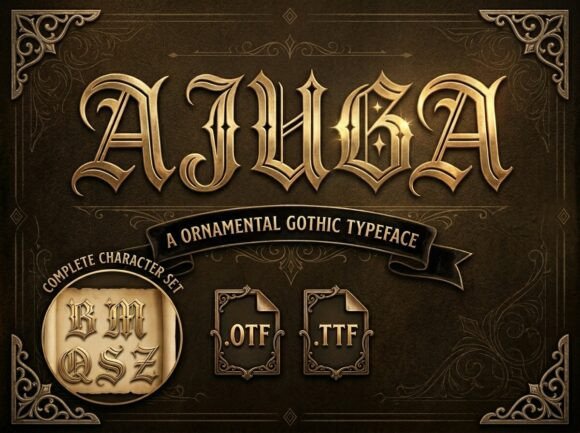
Ajuga is a modern ornamental typeface inspired by the Blackletter style, which was prominent in medieval Europe. This font stands out with its sharp, dramatic angles and intricate diamond-cut details that give each letter a chiseled, metallic look. Its golden-toned, three-dimensional aesthetic evokes the grandeur of ancient illuminated manuscripts and royal decrees, making it a striking choice for designers seeking to convey historical weight or visual richness.
Why Consider Ajuga?
Designers often turn to fonts like Ajuga when they want to create a strong visual impact rooted in tradition. The font's unique blend of craftsmanship and elegance can elevate a wide range of design projects, from branding to editorial work. Here are several reasons why someone might be drawn to Ajuga:
- Historical Inspiration: Ajuga draws from Gothic typography, offering a sense of authenticity and timelessness that appeals to niche markets and enthusiasts of medieval aesthetics.
- High Visual Contrast: The bold, angular strokes and detailed serifs make it ideal for creating high-contrast designs that stand out visually.
- Versatility Across Industries: From dark fantasy themes to luxury craft beer labels, Ajuga adapts well to various creative contexts where a regal or mysterious tone is desired.
Benefits of Using Ajuga
The primary benefit of Ajuga lies in its ability to command attention while maintaining an air of sophistication. Its ornate structure makes it particularly effective for use in headlines, logos, and other typographic elements where visual dominance is key. Additionally, the 3D effect adds depth and dimensionality to any design, helping it cut through the noise in digital or print formats.
For brands aiming to evoke a sense of heritage, exclusivity, or mystique, Ajuga can serve as a powerful stylistic tool. It works especially well for projects related to history, fantasy, or high-end craftsmanship, where typography plays a crucial role in setting the tone.
Tradeoffs and Considerations
While Ajuga offers impressive visual flair, it may not be suitable for all design scenarios. The complexity of its characters can reduce legibility at smaller sizes or in dense text blocks. This is a common challenge with many Blackletter fonts, as their stylized forms were originally intended for decorative purposes rather than extended reading.
Another consideration is the font's compatibility with different languages and character sets. Depending on your project's requirements, you may need to verify whether Ajuga supports the specific glyphs or accents needed for your content.
Furthermore, the ornamental nature of Ajuga means it should be used thoughtfully. Overuse can lead to visual fatigue or distract from the message being conveyed. Balancing it with simpler, more readable fonts is often necessary for multi-layered designs.
Where Ajuga Shines
Ajuga is best suited for applications where its dramatic appearance enhances the overall theme. Some ideal scenarios include:
- Branding for Niche Markets: Luxury craft breweries, heavy metal bands, and vintage product lines often benefit from Ajuga’s commanding presence.
- Editorial Design: Book covers, magazine titles, or special edition publications that aim to reflect a classic or fantasy-inspired narrative.
- Event and Poster Design: Concerts, tournaments, or themed events where the font contributes to an immersive atmosphere.
- Digital Media: Websites, social media banners, or video game interfaces that require a bold, eye-catching title treatment.
When to Look for Alternatives
Despite its strengths, there are situations where Ajuga may not be the optimal choice. For example:
- Long-Form Reading: If your project involves large amounts of body text, such as a website's main content or a printed manual, consider a more legible sans-serif or serif font instead.
- Modern Minimalism: Projects with a clean, contemporary aesthetic—such as tech startups, minimalist fashion brands, or modern art galleries—may find Ajuga too elaborate or out of place.
- Accessibility Concerns: In environments where accessibility is a priority, the ornate design of Ajuga could pose challenges for users with visual impairments. Pairing it with a secondary, accessible font is recommended in such cases.
Practical Tips for Choosing Ajuga
If you're evaluating Ajuga for your next design project, consider the following insights to guide your decision:
- Test in Context: Before finalizing, try Ajuga in the actual layout where it will appear. Observe how it interacts with colors, images, and surrounding text.
- Assess Readability: Ensure that the font remains legible in your chosen application. For instance, check if it works well as a headline without overshadowing supporting copy.
- Check Licensing: Confirm that the font license allows for commercial use if your project is intended for public distribution or profit-making purposes.
- Balance with Simplicity: Use Ajuga sparingly and pair it with complementary fonts to maintain visual harmony and prevent overwhelming the viewer.
Expectations and Best Practices
Those who choose Ajuga should expect a font that prioritizes style over subtlety. While it can add a sense of gravitas and uniqueness to a design, it requires careful handling to avoid misuse. Best practices suggest using it as a focal point rather than background text, ensuring sufficient spacing between letters and lines to preserve clarity.
Additionally, because of its ornamental qualities, Ajuga is often more impactful in monochrome settings than in color. The contrast between light and shadow in its 3D form can enhance readability and visual appeal when rendered properly.
Conclusion
Ajuga is a remarkable addition to the world of Gothic typefaces, offering a blend of historical inspiration and modern design flair. It excels in projects where visual storytelling is essential, but its complexity demands thoughtful implementation. By understanding its benefits, limitations, and appropriate use cases, designers can determine whether Ajuga aligns with their goals or if another font would better serve their needs.