Khaleed: A Font That Commands Ancient Prestige and Strategic Visual Impact
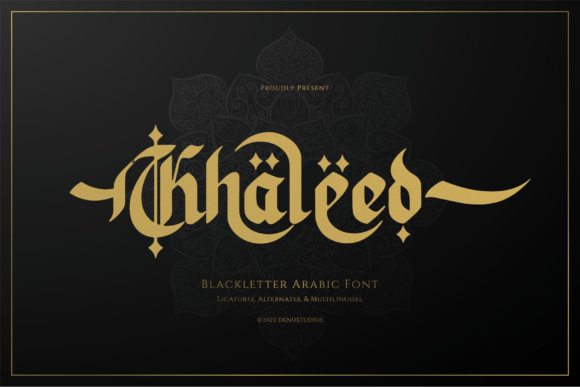
Fonts are more than just a means of conveying text—they shape perception, influence decision-making, and communicate brand identity with precision. For professionals and creators who seek to align their visual messaging with the gravitas of history and culture, Khaleed emerges as a compelling choice. This blackletter Arabic-style font is not merely decorative; it’s a tool for intentional design that bridges the architectural solidity of Gothic styles with the flowing elegance of traditional Middle Eastern calligraphy.
The Strategic Value of Khaleed in Modern Design
In today’s competitive digital landscape, every element of your brand or project must work strategically toward clarity and impact. Khaleed brings a rare combination of boldness and sophistication to the table. Its sharp-edged strokes and dramatic swashes evoke a sense of authority and timelessness—qualities that can elevate everything from luxury branding to cinematic title sequences.
For entrepreneurs and marketers aiming to position themselves in culturally rich markets, using Khaleed can be a powerful way to signal authenticity and respect for tradition. The font's intricate ligatures and ornate accents make it especially effective when designing content around heritage, spirituality, or historical narratives.
Why Khaleed Stands Out
- Architectural Strength: Inspired by gothic forms, Khaleed exudes stability and endurance, making it ideal for conveying serious messages.
- Calligraphic Elegance: The fluidity of its curves reflects the beauty of Arabic script, appealing to audiences who value craftsmanship and cultural depth.
- Bespoke Aesthetic: Features like interlocking circular curves and dagger-like terminals give it a unique character that sets it apart from generic fonts.
- Professional Power: Khaleed balances artisanal detail with readability, ensuring your message remains clear while commanding attention.
How to Use Khaleed Effectively in Your Projects
To harness the full potential of Khaleed, consider its strategic placement within your design framework. It’s not a one-size-fits-all solution, but rather a tool best used when purposefully aligned with specific goals and contexts.
Use Cases Where Khaleed Shines
Khaleed finds its natural home in several high-impact applications:
- Cinematic Titles: Whether you're designing movie posters or documentary intros, Khaleed adds a dramatic flair that enhances storytelling.
- Luxury Branding: Its ornate style and strong presence can help reinforce the exclusivity and prestige of ethnic or heritage-focused brands.
- Spiritual Book Covers: Authors of religious texts, meditative guides, or philosophical works will appreciate how Khaleed conveys wisdom and depth.
- Historical Posters: For events, exhibitions, or campaigns centered on ancient history or cultural preservation, this font provides an authentic visual anchor.
Planning Tips for Incorporating Khaleed
- Define the Context First: Before selecting Khaleed, ask whether your project needs a font that evokes strength, heritage, or mystique. If so, it fits perfectly.
- Balance with Simplicity: Pair Khaleed with clean, modern sans-serif fonts in body text to maintain legibility and avoid overwhelming the reader.
- Limit Usage: Because of its complexity, use Khaleed sparingly—perhaps only for headlines or key titles—to preserve its impact and ensure readability where it matters most.
- Consider Cultural Sensitivity: Ensure your use of Khaleed respects the cultural significance of Arabic calligraphy and doesn’t trivialize its meaning.
Strategic Considerations Before Relying on Khaleed
While Khaleed is visually striking, its effectiveness depends on thoughtful application. Here are some key considerations before integrating it into your workflow:
Evaluate Audience Expectations
Ask yourself: Does your audience expect or appreciate a font with such deep cultural roots? In certain industries, like technology or minimalistic design, Khaleed may feel out of place. However, in sectors such as fashion, publishing, or event marketing, it could become a defining feature of your visual identity.
Test for Readability
Despite its aesthetic appeal, Khaleed isn’t optimized for long-form reading. Always test how it performs in different sizes and on various devices. If used in body text, ensure there’s sufficient spacing and contrast to prevent eye strain.
Assess Multilingual Needs
Khaleed offers extensive multilingual support, which makes it versatile for international projects. Still, verify that the characters you need are available and render correctly across platforms and software. This is particularly important if you’re targeting multiple languages or regions simultaneously.
Intentional Use Over Random Application
Many designers fall into the trap of choosing a visually impressive font without considering its strategic role. With Khaleed, intentionality is key. Think about what message you want to send and how this typeface can enhance—not distract from—that goal.
Practical Examples of Intentional Use
- A spiritual retreat center uses Khaleed in its logo and promotional materials to reflect timeless wisdom and inner strength.
- A documentary filmmaker chooses Khaleed for the opening credits of a film exploring ancient Islamic architecture, reinforcing the subject’s grandeur.
- A luxury fashion brand integrates Khaleed into packaging designs to highlight the craftsmanship and cultural inspiration behind each piece.
Decision-Making Guidance
When evaluating whether Khaleed is the right fit, ask these questions:
- Does the tone of my project require a bold, authoritative voice?
- Am I targeting a market that values heritage, artistry, or tradition?
- Can I pair Khaleed with other fonts to maintain visual harmony?
- Will its complexity hinder communication, or will it enhance the narrative?
Potential Risks and How to Mitigate Them
Like any specialized font, Khaleed carries risks when used without careful planning. These include:
Overuse and Visual Clutter
Khaleed’s ornate nature can quickly overwhelm a design if used too broadly. To mitigate this, reserve it for focal points and let simpler typography handle supporting elements.
Misalignment with Brand Messaging
If your brand communicates modernity, innovation, or minimalism, Khaleed might clash with your established identity. Always ensure the font supports your core message rather than competing with it.
Accessibility Concerns
Its stylized form may pose challenges for screen readers or users with visual impairments. Implement fallback fonts and test accessibility features to maintain inclusivity.
Long-Term Value and Positioning
Investing in a font like Khaleed is more than a stylistic choice—it’s a strategic positioning move. When used thoughtfully, it can become a signature element of your brand’s visual language, helping establish trust and recognition over time.
For publishers, bloggers, and educators, Khaleed can serve as a visual marker of quality and credibility in niche subjects related to history, religion, or cultural studies. In branding, it can differentiate your business from competitors who rely on common, uninspired typefaces.
Building a Cohesive Visual Identity
One of the greatest advantages of Khaleed is its ability to unify diverse design elements under a single, distinctive theme. When paired with appropriate imagery, color palettes, and layout techniques, it can create a cohesive and memorable experience for your audience.
Consider using it in conjunction with earthy tones, parchment textures, or gold highlights to amplify its regal effect. This kind of deliberate styling ensures that your message resonates both aesthetically and emotionally.
Operational Integration and Workflow Planning
From a practical standpoint, incorporating Khaleed into your design process requires planning. Here’s how to streamline its use effectively:
Font Licensing and Compatibility
Before committing to Khaleed, confirm that its licensing terms align with your intended usage. Some fonts restrict commercial use or web embedding unless properly licensed. Also, check compatibility with your design tools and CMS to avoid technical hiccups during implementation.
Version Control and Alternates
Khaleed includes alternate characters and decorative variants, offering flexibility for creative expression. However, managing these options across a team or project can be complex. Establish a version control system to track which alternates are being used consistently and where they add the most value.
Training and Onboarding
Ensure your team understands how to apply Khaleed effectively. Provide examples of best practices and set guidelines for when and where to use it. This helps maintain consistency and prevents misuse that could dilute your brand’s message.
Khaleed as a Tool for Creative Expression
Designers often look for ways to stand out in a saturated market. Khaleed gives you that edge by allowing you to craft visuals that feel both professional and profoundly personal. Its artistic qualities open the door to custom illustrations, hand-lettered variations, and layered typographic treatments that can tell a story beyond words.
Enhancing Creativity Without Compromising Purpose
While experimenting with Khaleed’s ligatures and swashes, always return to the core purpose of your design. Does the added flourish serve the message? Or does it simply exist for show? Striking the right balance between creativity and clarity is essential for achieving meaningful outcomes.
Conclusion: Aligning Legacy and Innovation
Khaleed is more than a font—it’s a bridge between ancient artistry and contemporary strategy. By understanding its strengths and limitations, you can use it to build a stronger, more intentional visual identity. Whether you're launching a new product, crafting a book cover, or designing an event poster, Khaleed offers a way to communicate with distinction and depth.
Remember, the most successful brands and creatives don’t choose fonts at random. They select them based on goals, context, and long-term vision. Khaleed, with its fusion of power and elegance, is a font that rewards such consideration. Use it wisely, and it will become a cornerstone of your design legacy.