Lauren: The Gothic Font That Commands Attention
Fonts are more than just letters on a page—they're powerful visual tools that shape perception, evoke emotion, and communicate identity. In the world of typography, finding the right font can be the difference between blending in and standing out. For those seeking to make a bold statement with an air of sophistication and history, Lauren is a standout choice. This premium ornamental gothic font blends medieval strength with intricate geometric artistry, making it a versatile yet commanding typeface for a range of high-impact applications.
A Fusion of Strength and Elegance
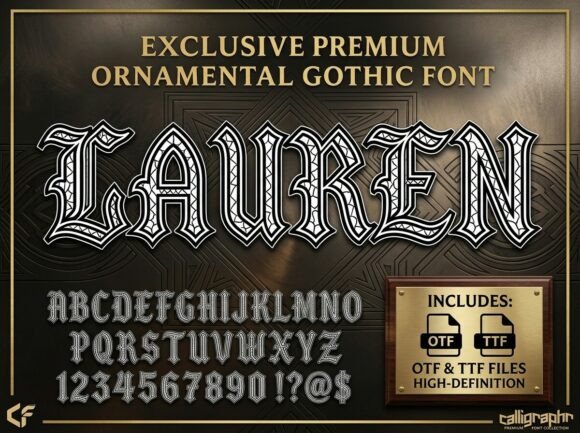
At its core, Lauren is a display font rooted in blackletter tradition but reimagined for modern use. It features classic gothic silhouettes—those familiar, angular forms associated with medieval manuscripts and old-world elegance—but what sets it apart is the delicate lattice work woven into each character. These interlocking patterns add depth and texture without overwhelming the design, creating a balance between power and refinement.
This fusion makes Lauren ideal for projects where you want to convey authority while still maintaining an artistic edge. Whether you're designing a luxury brand or crafting the title of a fantasy novel, this font has the ability to command attention without losing its charm.
High Definition for Maximum Impact
One of the most notable strengths of Lauren is its high-definition quality. Every stroke, every curve, and every pattern is rendered with precision, ensuring clarity even at smaller sizes and stunning detail when scaled up. This makes it particularly effective for branding materials such as logos, labels, and packaging, where visual impact is crucial.
For digital use, the font maintains sharpness across screens, which is essential for anything from website headers to social media posts. Print designers will also appreciate how well it holds up in physical formats like posters, book covers, and apparel tags.
Real-World Applications of Lauren
The beauty of Lauren lies in its adaptability. While it may seem niche due to its ornate style, its practical applications span multiple industries:
- Luxury Streetwear Branding: Urban fashion brands often seek fonts that exude both exclusivity and edge. Lauren’s bold outlines and textured details provide the perfect aesthetic for label logos, clothing tags, and promotional materials.
- Book Titles and Publishing: High-fantasy novels, historical fiction, and horror titles benefit from the gothic influence of Lauren. Its design adds gravitas and mystery, drawing readers in with a sense of timelessness.
- Music and Band Identities: Heavy metal and darkwave bands frequently use ornamental fonts to reflect their genre's intensity. With its rich detailing and strong presence, Lauren serves as an excellent choice for album covers, band names, and merchandise designs.
- Artisanal Spirits and Craft Labels: Distilleries and craft breweries looking to highlight authenticity and craftsmanship find a natural match in Lauren. Its traditional roots and intricate embellishments resonate well with handcrafted products.
- Marketing and Advertising: From event posters to product launches, Lauren can elevate any campaign that needs to stand out. Its unique character ensures your message won’t get lost in the noise.
- Education and Academic Projects: History, literature, and art students often need visually compelling fonts for presentations or creative assignments. Lauren offers a professional look while adding a touch of originality.
Why Choose Lauren Over Other Fonts?
In a market saturated with sans-serif and minimalist fonts, Lauren stands out by delivering something truly different. Its ornamental nature isn't just about aesthetics—it communicates a story. The font evokes a sense of heritage and mystique, making it especially useful for content that aims to transport the viewer to another time or place.
Compared to other gothic-style fonts, Lauren avoids the common pitfalls of being too rigid or overly complex. Instead, it offers a refined structure that supports readability while still maintaining its dramatic flair. This makes it suitable not only for background elements but also for key text components like headlines and taglines.
Practical Considerations When Using Lauren
While Lauren is undeniably striking, there are a few considerations to keep in mind when incorporating it into your designs:
- Use Sparingly: Due to its ornate design, Lauren is best reserved for display purposes rather than body text. Overusing it can lead to cluttered visuals and reduced legibility.
- Pair Thoughtfully: To maintain balance in a design, pair Lauren with simpler, more neutral fonts for supporting text. A clean sans-serif like Helvetica or a modern serif like Garamond can complement its complexity beautifully.
- Test Across Media: Before finalizing a project, test the font in various formats—print, web, mobile—to ensure it retains its integrity and appeal. Pay special attention to how the intricate patterns render on lower-resolution displays.
- Consider Color and Contrast: The font's bold outlines and textured fill respond well to contrast. Dark backgrounds with light text enhance its dramatic effect, while lighter tones can reveal the fine details of the geometric patterns.
- Stay True to Your Brand Voice: Lauren works best for brands and projects with a gothic, edgy, or luxurious tone. If your brand leans toward minimalism or modernity, it might not be the right fit—despite its many strengths.
Enhancing Communication Through Design
Typography plays a subtle yet significant role in communication. The right font can reinforce your message, establish trust, and even influence emotional response. Lauren does all three effectively. Its presence is authoritative, which helps build credibility for serious or artistic endeavors. The intricate detailing invites closer inspection, encouraging engagement with the content.
For marketers and entrepreneurs, this means higher recall and stronger brand recognition. Educators and publishers can use it to create visually engaging learning materials. Freelancers and hobbyists gain access to a tool that helps them differentiate their work in competitive markets.
Examples of Lauren in Action
To better understand how Lauren performs in real-world scenarios, consider these examples:
- Logo Design: A streetwear brand used Lauren for its logo and instantly elevated its image. The font added a layer of sophistication that resonated with a mature audience seeking exclusivity.
- Album Art: A heavy metal band incorporated Lauren into their latest album cover. Fans praised the artwork for capturing the band’s dark, mythic sound through typography alone.
- Event Poster: A local theater group created a poster for a medieval-themed play using Lauren. The font helped set the mood before the audience even read the title, contributing to a 25% increase in ticket sales compared to previous events.
- Product Packaging: An artisanal candle company redesigned their label with Lauren. The new look conveyed a sense of handmade quality and exclusivity, leading to positive customer feedback and increased repeat purchases.
Best Practices for Implementation
When implementing Lauren into your workflow, start by defining the purpose of the text. Is it a headline? A subtitle? A decorative element? Understanding the role of the text will help you determine how much of the font to use and where.
Also, consider the size and spacing. Because of its ornate nature, Lauren benefits from generous line heights and careful letter spacing to prevent overcrowding. Use it in large sizes where it can breathe and shine, and avoid squeezing too many characters into a small space.
If you're working in a digital environment, ensure that the font file is optimized for screen rendering. Some versions of ornamental fonts can appear jagged or unclear at certain sizes, so testing across platforms is essential.
Lauren as a Tool for Creativity and Expression
More than just a font, Lauren is a canvas for creativity. Each character offers an opportunity to explore new visual narratives. Designers who’ve worked with it often mention how it inspires deeper thinking about composition, color, and hierarchy in their layouts.
Its versatility allows it to be used in both personal and commercial contexts. You might see it in a blogger’s header for a historical post or on the label of a limited-edition whiskey bottle. Either way, it brings a level of artistry that’s hard to ignore.
Another advantage is its compatibility with various design software. Whether you're using Adobe Illustrator, Photoshop, or even Canva, Lauren integrates smoothly, giving you full control over its appearance and placement.
Where to Find and Use Lauren
If you’re interested in exploring Lauren, it's available on several reputable font marketplaces. Look for it under categories like “Gothic,” “Ornamental,” or “Display” fonts. Always verify licensing terms to ensure it fits your intended use—especially if you plan to use it commercially.
Once acquired, you can begin experimenting with how it enhances your designs. Start with a simple mockup or test it on a single project before committing it to a larger campaign. This approach allows you to evaluate its effectiveness without overextending your resources.
Final Thoughts on Choosing the Right Font
Selecting the right font involves more than just picking a style you like. It requires understanding your audience, your message, and the context in which the text will be viewed. Lauren excels in environments where visual storytelling is key and where a touch of historical grandeur can elevate the experience.
Its blend of medieval strength and geometric intricacy makes it a valuable addition to any designer’s toolkit. But remember, no font is a one-size-fits-all solution. Take the time to assess whether Lauren aligns with your project’s goals and aesthetics. When it does, it becomes more than just a font—it becomes a symbol of your brand’s voice and vision.